AI-Powered Chichewa Avatar for VMMC Client Feedback
Jhpiego partnered with Fortell Impact to pilot a Chichewa-speaking, AI-powered digital avatar that invited clients to share feedback after voluntary medical male circumcision through a private, conversational interaction in their own language. Clients reported feeling comfortable, respected, and willing to speak honestly. Privacy, cultural familiarity, and dignity shaped how people engaged.
Watch the full interview with Jhpiego Team
Background
After VMMC in Malawi, Jhpiego wanted clients to speak freely about their experience. But traditional feedback tools had limitations: low participation, fears of judgment and repercussions, and methods that weren't culturally familiar. As of 2022, the estimated HIV prevalence among people aged 15 to 49 years in Malawi was 7.1%. Voluntary medical male circumcision (VMMC) is one of the essential interventions recommended by UNAIDS as part of the strategy to end AIDS as a public health threat by 2030.
Enabling clients to speak freely
Traditional feedback tools faced limitations: low participation, fears of judgment or repercussions, and methods that weren't culturally familiar. Clients needed a way to share honest feedback without social pressure.
Jhpiego, a non-profit organisation affiliated with Johns Hopkins University, has been working in Malawi since 1999. This organisation is the country's biggest provider of VMMC services, with more than 690,000 men having received voluntary medical circumcision.
Capturing client voice with care
When patient feedback tools are designed with privacy, cultural familiarity, and dignity, people don't just respond—they speak up. The AI summaries were compared with independent third-party qualitative analysis and found good consistency and completeness, with human review adding nuance. This approach is designed to accelerate listening—not replace interpretation.
Project in Practice
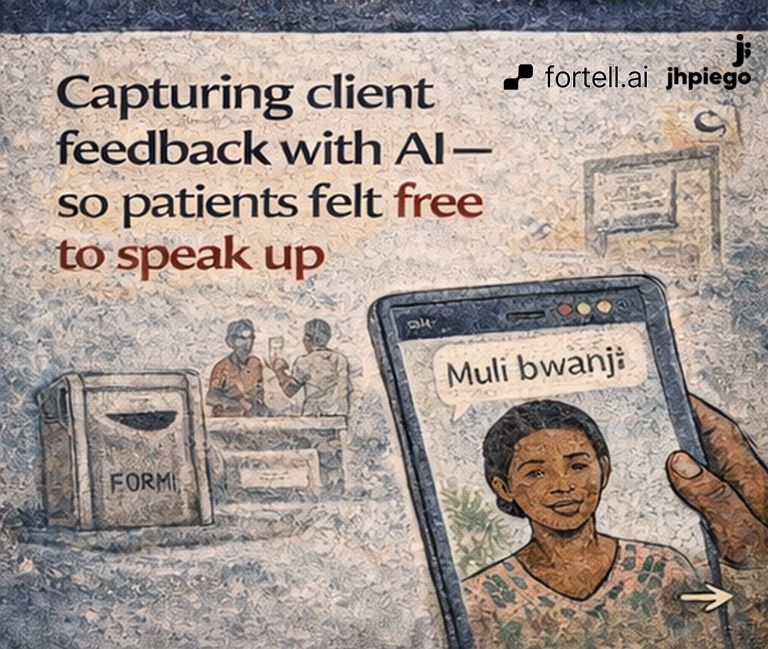
Capturing client feedback with AI—so patients felt free to speak up
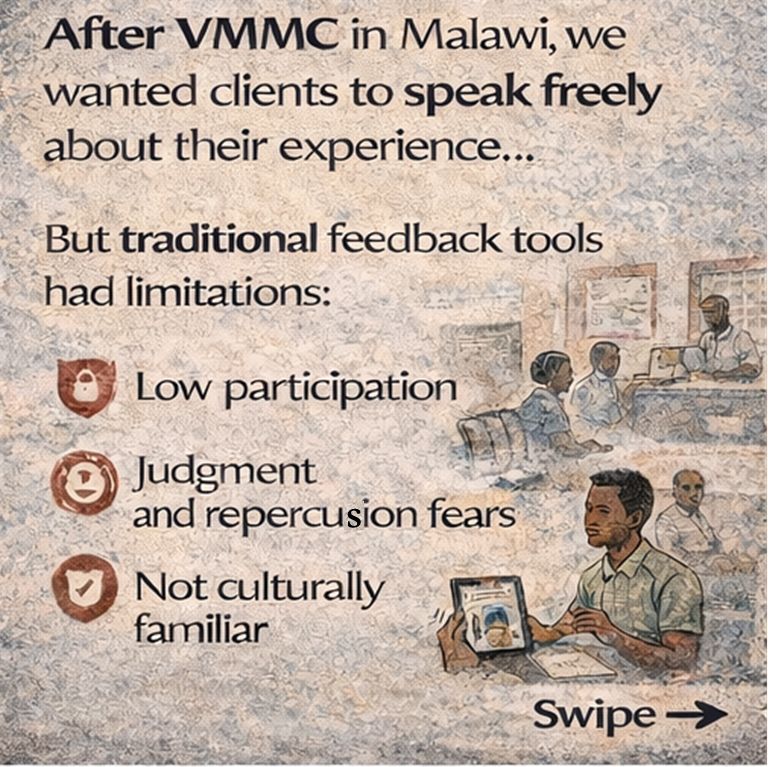
Traditional feedback tools had limitations: low participation, judgment fears, not culturally familiar
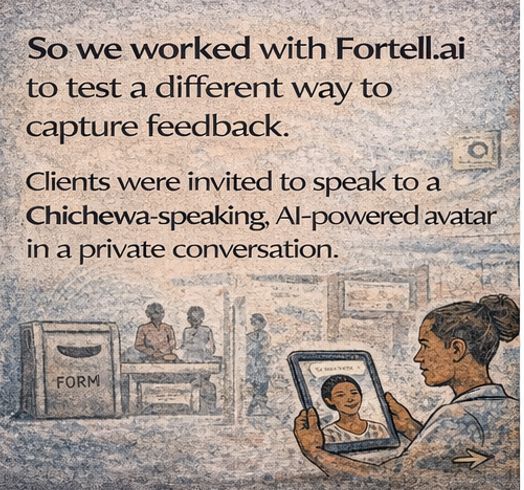
Clients spoke to a Chichewa-speaking, AI-powered avatar in a private conversation
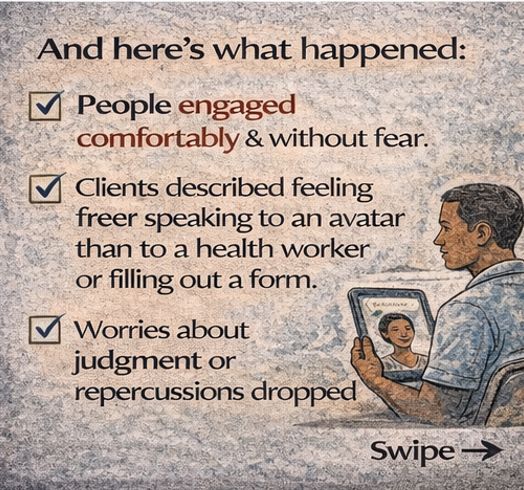
And here's what happened: people engaged comfortably and without fear
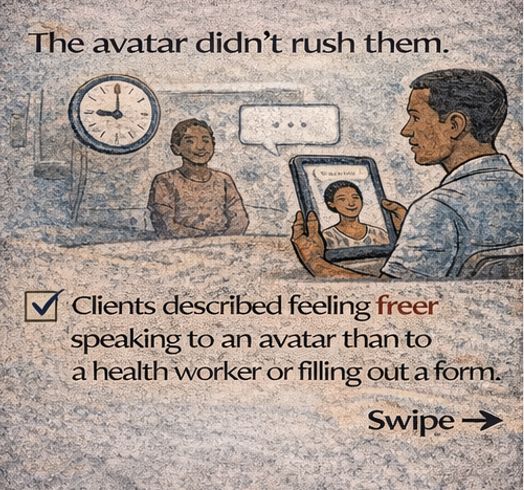
The avatar didn't rush them—clients felt freer speaking to an avatar
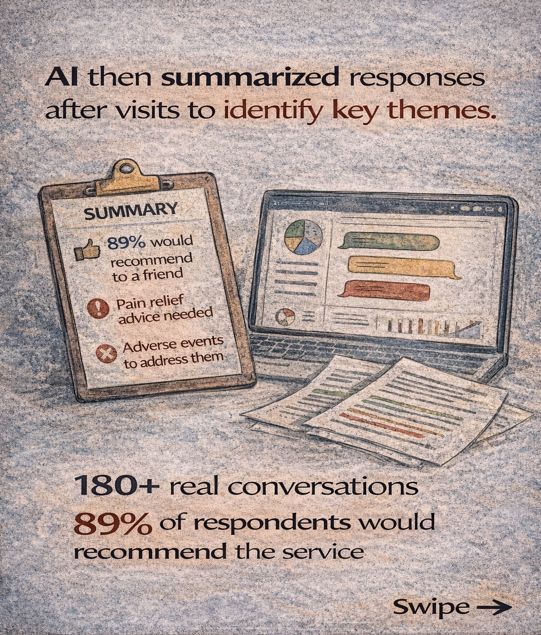
AI summarized responses to identify key themes: 180+ conversations, 89% recommend the service
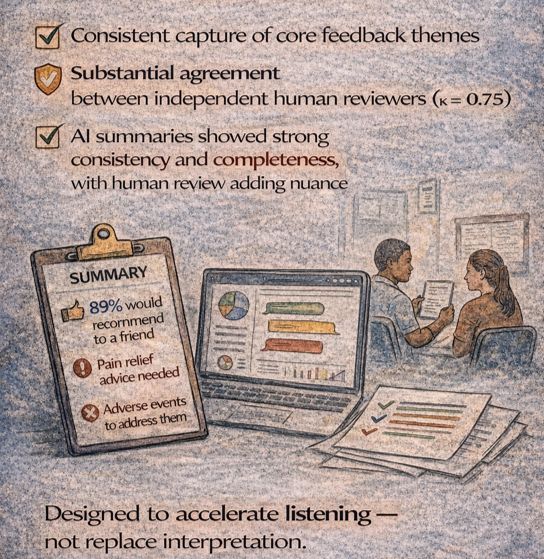
AI summaries showed strong consistency and completeness, designed to accelerate listening
When feedback tools are designed with privacy and dignity, people speak up
"When patient voice is captured with care and processed responsibly, health systems listen better and respond sooner."
What happened
People engaged comfortably and without fear
Clients described feeling freer speaking to an avatar than to a health worker or filling out a form
Worries about judgment or repercussions dropped
89% of respondents would recommend the service to a friend
AI summaries showed strong consistency and completeness, with substantial agreement between reviewers (κ = 0.75)
Pain relief advice was flagged as a recurring need
Adverse events were identified for follow-up
Outcome
89% of respondents would recommend the service to a friend. AI summaries showed strong consistency and completeness when compared with independent human-generated summaries, with substantial agreement between reviewers (κ = 0.75). People engaged comfortably and without fear. The approach highlighted an important possibility: AI has the potential to enable feedback themes and key insights to reach program teams and decision-makers faster.
Decision Impact
Insights enabled faster identification of client needs and areas for service improvement.
Have a similar challenge?
We'd be happy to discuss how we might approach your specific context and requirements.