AI-Enabled National Consultation to Inform UNICEF Mozambique's Strategic Priorities
UNICEF Mozambique partnered with Fortell Impact to conduct a nationwide voice-based consultation capturing the perspectives of children, adolescents, and community members to inform its five-year strategic planning process. All data collection was completed in less than one week. A total of 2,316 individuals initiated the consultation, with 2,043 completing it—an 88.2% completion rate.
Background
UNICEF Mozambique sought to inform its upcoming five-year strategic planning process by directly capturing the perspectives of children, adolescents, and community members across the country. In line with the Agenda for Children, the objective was to understand, in participants' own words, the most pressing challenges affecting children and young people and to gather concrete recommendations on how UNICEF could strengthen its support. The consultation aimed to complement existing evidence by amplifying lived experiences at scale, particularly from populations often underrepresented in formal planning processes.
Reaching underrepresented voices at scale
Traditional consultation methods struggle to capture perspectives from geographically dispersed populations, particularly children and adolescents whose voices are often missing from formal planning processes.
The choice of a male avatar was informed by a prior UNICEF pilot comparing male and female avatars, in which participants reported greater comfort and clarity when interacting with the male version. Onboarding instructions were refined to ensure that younger participants understood how to speak and progress through the interview.
Voice-based consultation in local language
All spoken responses were automatically recorded and transcribed. Fortell Impact developed a hierarchical codebook aligned with UNICEF's strategic domains, structured across domains, themes, categories, and codes. A Large Language Model was used to categorise and summarise responses, with automated outputs reviewed and refined by a qualitative research specialist to ensure accurate interpretation and preserve the voices of children and adolescents.
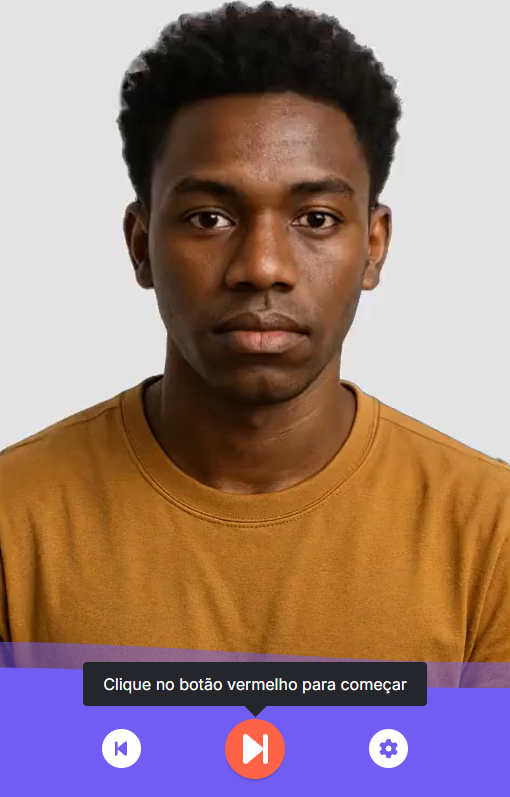
The Portuguese-speaking male avatar used in the UNICEF Mozambique consultation
Diversity of voices captured
By Age Group
By Gender
Participant demographics
355 respondents were under 18, 765 were aged 18–25, 747 were aged 26–35, and 443 were over 35. In terms of gender, 980 respondents identified as female and 1,334 as male.
"UNICEF's impact is greatest when it maintains close oversight of programmes and resources, particularly in contexts where governance constraints or mistrust in public institutions limit effectiveness."
"No one understands their problems better than they do. Children and young people should be actively involved in identifying needs and shaping interventions."
"Respondents describe children's lives as shaped by overlapping risks—poverty, weak systems, conflict, climate shocks, and harmful norms interact to undermine health, education, safety, and opportunity."
Key themes identified
Health & Nutrition: Adolescent and premature pregnancies as major drivers of maternal and neonatal risk, linked to early marriage and lack of reproductive health information. Malnutrition and hunger described as pervasive and chronic.
Education: Poor infrastructure, overcrowded classrooms, lack of materials. Distance to school, child labour, early pregnancy, and forced marriage drive dropout—particularly for girls.
Violence & Protection: Domestic violence, sexual abuse, early marriage, child labour, and exploitation described as widespread. Protection systems viewed as inadequate.
Economic Vulnerability: Poverty characterised as structural and persistent, with unemployment and food insecurity eroding household resilience.
Climate Risks: Floods, droughts, and cyclones destroy homes, disrupt schooling, contaminate water, and exacerbate food insecurity. Calls for climate-resilient infrastructure.
Voice & Participation: Strong demand for children and youth to be actively involved in identifying priorities, designing programmes, and monitoring implementation.
Outcome
The consultation revealed that children's and adolescents' lives in Mozambique are shaped by overlapping and cumulative risks rather than isolated problems. Poverty, weak public systems, conflict, climate shocks, and harmful social norms interact to undermine children's health, education, safety, and future opportunities. Respondents consistently emphasised that vulnerabilities begin early in life and intensify as children grow older, particularly for girls and adolescents living in poor, rural, or conflict-affected settings. UNICEF is consistently perceived as a trusted actor with the capacity to act where public systems fall short, with a strong expectation that UNICEF not only supports systems but ensures assistance reaches children directly and transparently. The consultation provides a robust evidence base to inform UNICEF Mozambique's strategic planning and investment decisions over the coming five years.
Decision Impact
Insights fed directly into UNICEF Mozambique's five-year strategic planning process.
Have a similar challenge?
We'd be happy to discuss how we might approach your specific context and requirements.